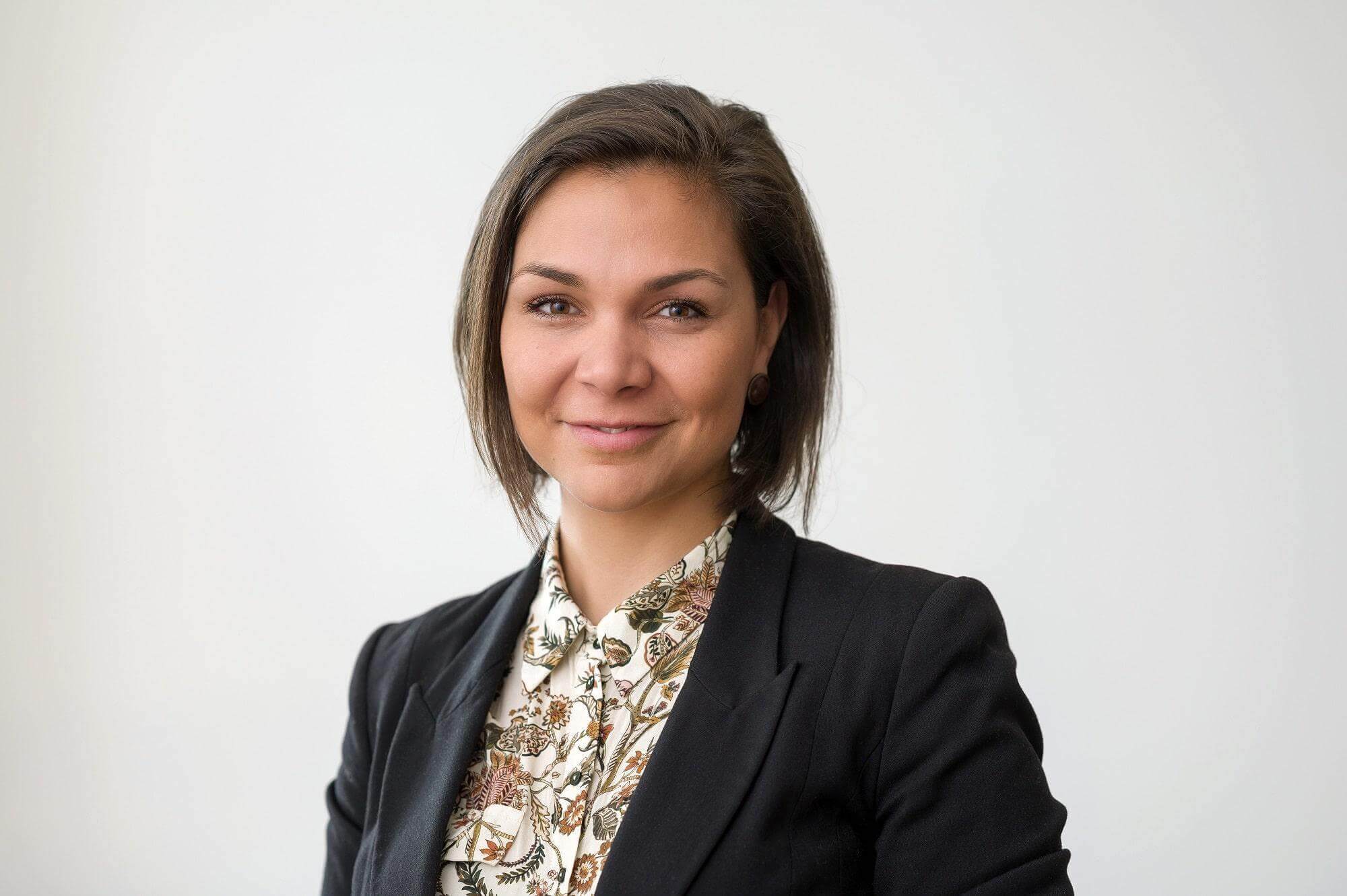
"I thought I could sit on the other side, where I could do miracles for other Salesforce user clients"
Starting from the beginning in a different profession is never easy. However, we believe that the presence and guidance of a credible and experienced professional can be a huge help, especially if they have been in the same shoes before. Get to know Dóri's story, who was once an office manager and is now a Business Analyst and a mentor in our CRM Specialist course.
.jpeg)
Dóri never considered herself a careerist. Balancing work and personal life has always been important to her, as she wanted to dedicate enough time to her relationships, sport and hobbies. Therefore, it was important for her to find a profession that supports work-life balance. Fortunately, finding such a career opportunity is not impossible, especially if someone is interested in IT. But how and when did she embark on the path that led her here? We asked her!
What did you study before? Do you remember your first encounter with IT?
I was about 6-8 years old when my brother and I started exploring the world of computers with a Commodore 64 in my grandfather's attic. Of course, back then, we were just playing pixelated Prince of Persia, but even then, I was deeply impressed by using a computer and the possibilities it held. I liked it so much that in the upper grades of elementary school, I joined a computer science club.
In which field did you start your career?
After high school, I completed a business informatics course, but my life took a slightly different direction, and I ended up working as an office manager in a ceramic factory near Pécs, where I spent the first 1.5 years of my career. After that, I found my first job where I got much closer to IT – I became a sales representative at a software development company, where I stayed for almost 14 years, thanks to the continuous learning opportunities. There, I had a chance to get to know Salesforce.
Why did you ultimately switch to IT? How did you become a Salesforce Consultant?
During the COVID pandemic, my company switched to remote work, which was quite frightening at first, but I got the hang of it in a few weeks and even started to like it. So when my workplace planned to return to the office for multiple days, I was already thinking of continuing in a remote work setting. Also, by that time, I had been using Salesforce daily for 3-4 years, and I was getting more and more interested in it.
I regularly had meetings with the contact person from the Salesforce consulting company at the time, where I could see firsthand how new automations were being implemented, making tasks that used to take several days of manual work easily solvable with a single click. It was very exciting to witness these developments, and I had the thought that I would like to sit on the other side, where I could do miracles for other Salesforce user clients.
I approached a few companies working with Salesforce and after a few interviews, I accepted an offer from a company in Budapest, where I was hired as a Salesforce Consultant. I spent 1.5 years there and during that time, I learned a lot, obtained the Certified Administrator certification, which provided the foundation for me to switch to my current job and also contributed to my position as a mentor at Green Fox.
What do you currently do? What does your day look like?
Since February I have been working as a Business Analyst at Nissan's Budapest office. I work remotely, typically from 8 a.m. to 5 p.m. and participate in numerous online meetings during this time – about 90% of them are in English because I mostly work with foreigners in my internal Salesforce team and on the business side.
Currently, I am working on gathering requirements for the introduction of a feature that supports a sales process, using my existing technical knowledge related to Salesforce. Based on the requirements, I create detailed documentation for the development team responsible for implementing the requested solution. After development, I participate in testing the feature, present it to designated managers in various branches, and, if necessary, assist in fine-tuning the feature before going live.
Additionally, I can implement some new features myself. Recently, I successfully introduced a new automation to support the customer service department – as part of this, I independently handled the development (without coding!), testing, and documentation, and then I enjoyed the experience of customer satisfaction. :)
What do you enjoy most about your job and what has been the biggest challenge so far?
I really enjoy constantly learning something new, and it is also very motivating when I can share my knowledge with others.
The most challenging part was probably that most of the communication was in English because my previous role, as a salesperson, had left me out of practice. As a Salesforce Consultant, I became more comfortable with English meetings after just a few weeks, and a few months later, I was confidently leading any discussion, whether it was British, Italian, or French on the other side.
You are one of the leading mentors for our CRM Specialist program. What do you like most about mentoring?
The greatest satisfaction comes when I see my students experiencing the "eureka moment." They start from scratch in this new field, complete the required modules and tasks. Then comes the moment when someone can independently solve a more complex task, understand the underlying connections, and their face lights up, their eyes sparkling as they realize they have successfully overcome the first, more challenging step. For me, this feeling was the most rewarding.
I also watched more and more people getting their Certifications as the course approached its end, and it made me very proud because I knew that I had also contributed to helping them take their careers in a new direction.
Who do you think would benefit from this course? Who would you recommend Salesforce to?
I think if someone has some knowledge of business processes (sales, customer service, marketing, finance, etc.), has an interest in IT, and is looking for something new, they can confidently embark on such a course.
What are your plans for the future in terms of your career?
Surprisingly, I want to learn even more. In the near future, I plan to obtain 1-2 new certifications that are specific to my current project and role. Promotions are quite common within the company, and we are currently in the Career Development Plan season, where I, along with my immediate supervisors, consider my future opportunities based on my strengths and goals.